
 Fa
 En
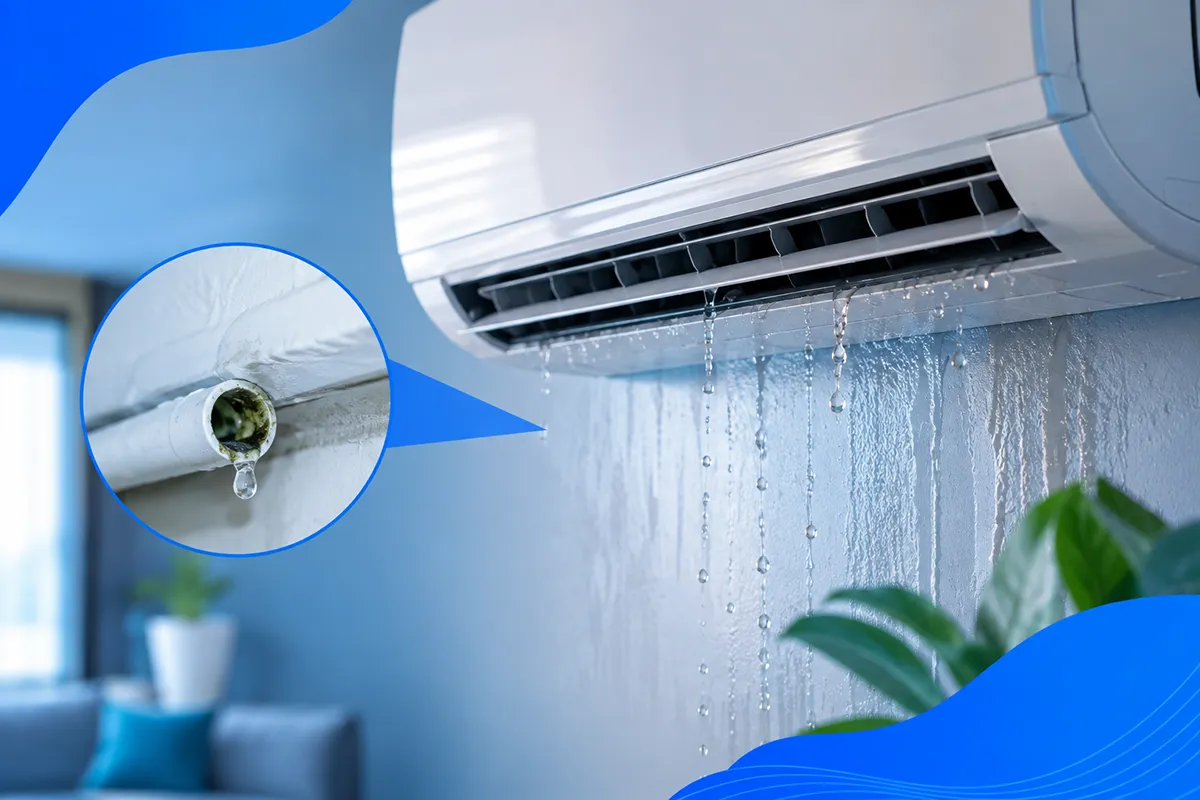
To find the reason why your air conditioner is leaking water, you need to act like a detective and carefully inspect everything from the indoor and outdoor units to the copper pipes. Of course, to get to the root of the problem and prevent the situation from getting worse, you need a little skill and attention to detail. From dirty filters to clogged drain pans and drain pipes, there are several common culprits behind this problem. In the following sections, we will examine each of these issues one by one so that you can identify the cause and learn how to stop .your air conditioner from leaking water
The Most Common Causes of Air Conditioner Water Leakage
We do not want to waste your time, so we have prepared the table below to help you quickly identify the main causes of air conditioner water leakage. After the table, we will explain each issue in simple language and with enough detail:
| Cause of Water Leakage | Description of the Problem |
|---|---|
| Clogged Drain Pipe | A bent pipe, buildup of sediment and algae, or a blocked drain hose can prevent water from flowing out properly. |
| Dirty Air Filters | Dust buildup restricts airflow, reduces efficiency, and puts additional pressure on the system. |
| Frozen Evaporator Coil | The coil may freeze due to low refrigerant, a faulty fan, or dirty filters, causing a large amount of water to drain when the ice melts. |
| Low Refrigerant Level | Insufficient refrigerant can disrupt the system, cause the evaporator coil to freeze, and eventually lead to the drain pan overflowing. |
| High Humidity | Warm and humid air entering through open doors and windows can increase condensation and cause the drain pan to overflow. |
Clogged Drain Pipe
In many cases, the main reason behind annoying air conditioner water leakage is the drain pipe. If the drain line becomes blocked for any reason, water cannot leave the indoor unit properly, eventually causing it to overflow. This usually happens for several common reasons:
- Kinking or bending: If the drain hose becomes bent or kinked during installation or relocation, the water flow may become blocked, causing the indoor unit to overflow.
- Clogging and sediment buildup: Dust, sludge, algae, and other debris can gradually accumulate inside the drain pipe and completely block the water outlet.
- Incorrect drainage: If the end of the drain hose is placed inside a container or drain where the water level rises and covers the hose opening, the water will have nowhere to go. As a result, it may flow back toward the indoor unit and leak from the front.
How to fix the problem:
- Inspect the drain line: Carefully check the entire length of the drain hose to locate the blockage.
- Mechanical cleaning: Use gentle air pressure or low water pressure to remove accumulated debris.
- Disinfection and cleaning: Use suitable cleaning solutions or a mild water-and-vinegar solution to help remove algae and buildup.
- Contact a technician: If the blockage cannot be removed, have a qualified technician inspect the system using professional equipment.
- Regular maintenance: Schedule routine maintenance and clean the filters and drain line regularly to prevent future blockages.
Dirty Air Filters
When dust accumulates on the air filters and they become heavily clogged, airflow through the filters is significantly restricted. This means air can no longer circulate properly through the system. As a result, the air conditioner becomes less efficient, the system is placed under additional pressure, and eventually, it Causes Air Conditioner Water Leakage.
How to fix the problem:
- Monthly cleaning: Remove the indoor unit’s air filters at least once a month and wash them with lukewarm water.
- Use a mild cleaner: Remove grease and stubborn dirt using a mild cleaning solution.
- Dry the filters completely: Make sure the filters are completely dry before reinstalling them to prevent bacterial and mold growth.
- Replace damaged filters: Replace old, damaged, or deteriorated filters with new ones.
- Maintain system efficiency: Regular filter cleaning helps improve the air conditioner’s performance and reduces the risk of water
- leakage.
Frozen Evaporator Coil
The situation can become more serious when you turn off the air conditioner or increase the temperature setting. At this point, all the accumulated ice begins to melt at once, sending a large amount of water into the drain pan. Since the drain pan may not be designed to handle such a sudden volume of water, it can overflow, resulting in Air Conditioner Water Leakage
How to fix the problem:
- Check the refrigerant pressure: Have the refrigerant level checked and recharge the system with the correct amount and type of refrigerant if necessary.
- Clean the filters: Thoroughly wash or replace the air filters to restore proper airflow.
- Inspect the fan: Have a technician check the fan and repair or replace it if necessary.
- Fix refrigerant leaks: Make sure there are no leaks anywhere in the refrigerant circuit.
Low Refrigerant Level
If you are not familiar with refrigerant, it is the substance used by air conditioning systems to transfer heat and provide cooling. Different air conditioner models use different types of refrigerant.
If the refrigerant level drops for any reason, the system may stop operating properly and show noticeable symptoms such as reduced cooling performance and water leakage.
Here is what happens: when the refrigerant level falls below the required amount, the balance of the system is disrupted. This can cause the evaporator coil to become excessively cold and freeze, affecting the overall performance of the unit. When the air conditioner is turned off, the accumulated ice begins to melt, sending a significant amount of water into the drain pan. If the drain pan cannot handle this sudden volume of water, it may overflow, resulting in water leaking onto the wall, floor, or household belongings.
How to fix the problem:
- Check for low refrigerant: Determine whether the system requires additional refrigerant.
- Use the correct refrigerant: Make sure the refrigerant type is compatible with the specific air conditioner model.
- Proper refrigerant charging: Have a qualified technician recharge the system using the correct procedures and equipment.
High Humidity
Even if the air conditioner is working perfectly, leaving a door or window open while it is running can allow warm, humid outdoor air to enter the room. In this situation, the air conditioner has to work continuously to compensate for the increased heat and humidity and remove more moisture from the air. This excessive condensation can cause the drain pan to fill quickly and eventually result in water leakage.
How to fix the problem:
- Keep doors and windows closed: Prevent warm and humid outdoor air from entering while the air conditioner is running.
- Use curtains and a dehumidifier: These can help improve indoor conditions and reduce the load on the air conditioner.
- Install weatherstripping: Seal gaps around doors and windows to reduce moisture infiltration and help maintain the desired indoor temperature.
How to Fix an Air Conditioner Water Leak
Now that we have covered the main causes of air conditioner water leakage, it is time to take action. Let’s go through the process step by step and see how each problem can be addressed to stop the leakage:
| Step | Action / Inspection | Details |
|---|---|---|
| 1 | Initial inspection | Turn off the air conditioner, locate the exact source of the leak, and determine whether the water is dripping slowly or flowing continuously. |
| 2 | Inspect the drain pan | Open the indoor unit and check the drain pan for cracks or damage. Also, make sure water is draining properly. |
| 3 | Clean the drain line | Remove blockages from the drain pipe using suitable cleaning methods and flush the line to remove algae and debris. |
| 4 | Clean the air filters | Wash the filters with lukewarm water and a mild detergent or replace them if necessary to improve airflow. |
| 5 | Repair or replace the drain pan | Replace the drain pan if it is cracked, damaged, or corroded. Using adhesive as a permanent repair is not recommended. Make sure the pan is installed at the correct angle. |
| 6 | Check the indoor unit’s slope | Make sure the indoor unit is installed with the correct slope so that condensation can flow properly toward the drain pipe. |
| 7 | Address coil freezing | Have a technician check the refrigerant charge, clean the coil and fan, and repair any faulty components. |
How to Prevent Air Conditioner Water Leakage
By following these simple but practical tips, you can reduce the risk of water leakage and significantly extend the useful life of your air conditioner, allowing it to keep you cool without unnecessary problems.
- Regular maintenance: Clean the filters, coils, and drain pan regularly to keep the system operating efficiently.
- Keep the drain line clear: Remove sediment, algae, and other buildup promptly to ensure smooth water drainage.
- Check the drain pump: Inspect the drain pump regularly to make sure it is operating properly and removing condensation effectively.
- Inspect the coil and refrigerant: Keep the coil clean, prevent freezing, and make sure the refrigerant charge and fan are operating correctly.
- Insulate the pipes: Make sure the insulation around the refrigerant pipes is in good condition to prevent unwanted condensation and moisture.
- Set the appropriate temperature: Set the air conditioner to around 22–26°C and keep doors and windows closed while the system is operating.
Choose a suitable installation location: Install the air conditioner in a dry, safe, and appropriate location to protect its components.
Final Thoughts
Now that you know the main causes of air conditioner water leakage and how to address them, controlling the situation should be much easier. However, if you feel that the problem is more serious and your air conditioner is nearing the end of its service life, we recommend visiting Karunil before the heat becomes unbearable.
The air conditioners offered by our company come with a reliable 24-month warranty, giving you peace of mind and confidence during the hottest days of the year. From the moment you purchase your air conditioner through installation and after-sales service, our team is there to support you.
Frequently Asked Questions
What causes water to leak from the indoor unit of an air conditioner?
The most common causes include a clogged drain pipe, dirty air filters, a frozen evaporator coil, low refrigerant levels, and high humidity.
Can water leakage damage the technical components of an air conditioner?
Yes. If left untreated, water leakage can gradually cause serious damage to the internal components of the air conditioner.
Can I fix an air conditioner water leak myself?
Some simple problems, such as dirty filters or minor drain blockages, can be addressed by the user. However, more complex problems should be inspected and repaired by a qualified technician.
How can I stop my air conditioner from leaking water and extend its lifespan?
Regular and timely maintenance is one of the best ways to prevent water leakage, maintain efficient performance, and extend the service life of your air conditioner.


